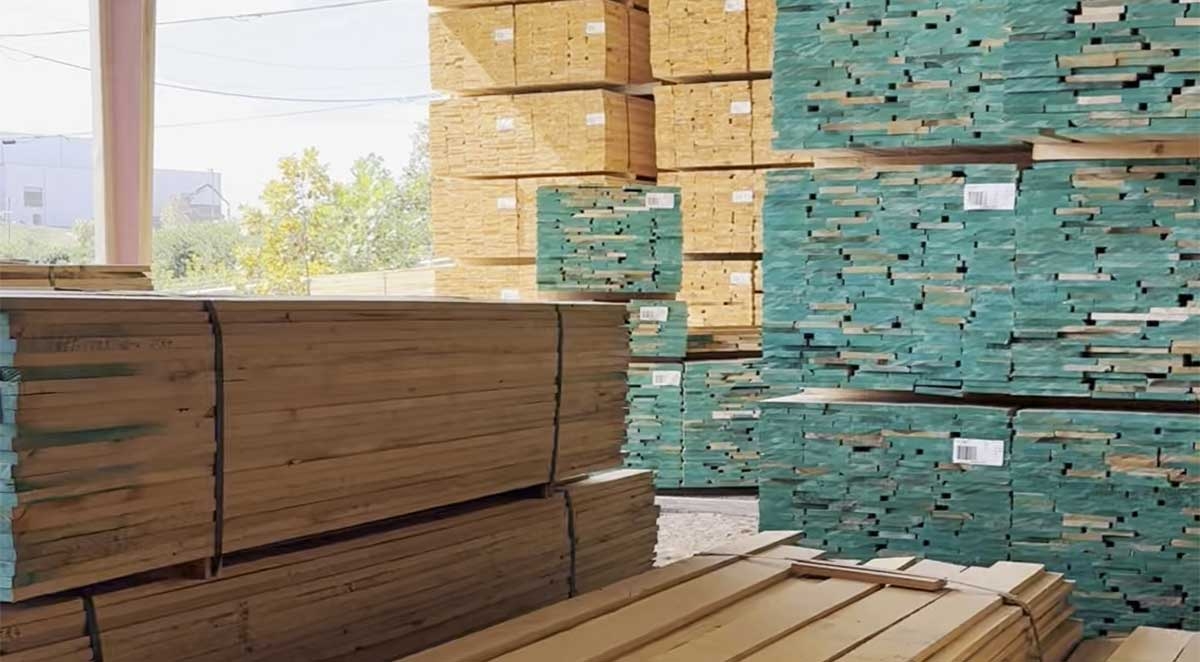
What is Planed Lumber? Why is it Important for Builders and Manufacturers?
Planed lumber refers to boards that have been run through a planer, which removes rough saw marks and brings each piece to a consistent thickness and smooth surface. This precision allows for tighter joints, cleaner finishes, and fewer material issues during installation or assembly.
When working with unplaned or rough-sawn lumber, additional time must be spent on milling, sanding, or adjusting. By using planed lumber, builders and manufacturers can skip those extra steps and focus directly on their craft. This efficiency translates into time savings and reduced material waste, both critical factors in modern production environments.
Advantages of Planed Lumber for Builders
Builders often face tight schedules and budgets, making material consistency and performance essential. Planed lumber delivers several distinct benefits that support construction projects of all scales—from residential framing to high-end architectural millwork.
Key Advantages Include:
- Ease of Handling: Smooth surfaces make boards safer and easier to move, cut, and install.
- Consistency of Dimensions: Each board has a precise thickness and width, allowing for accurate fits in framing, trim, and cabinetry.
- Reduced Labor Time: Pre-planed boards eliminate the need for on-site surfacing or sanding.
- Improved Finish Quality: Paints, stains, and sealants adhere more evenly to a planed surface.
- Reduced Waste: Uniform lumber minimizes rework and offcuts caused by irregular dimensions.
In addition, planed lumber simplifies coordination among multiple trades on a job site. Carpenters, trim installers, and finishers can rely on the same precise stock, ensuring seamless alignment and reducing compatibility issues between components. Whether building homes in Wilkesboro or large commercial spaces across the Southeast, planed lumber supports smoother workflows and cleaner results.
Advantages of Planed Lumber for Manufacturers
Manufacturers depend on predictability. When lumber dimensions vary or surfaces are inconsistent, production slows down, machinery adjustments increase, and final product quality may suffer. Planed lumber removes these variables, offering a material that is ready to use and engineered for precision.
For manufacturers, the benefits include:
- Improved Machinability: Uniform thickness allows for seamless feeding into automated equipment and cutting systems.
- Enhanced Product Uniformity: Each finished piece maintains the same standard, essential for mass production.
- Reduced Tool Wear: Smooth lumber puts less strain on cutters and blades.
- Better Surface Preparation: Planed boards require minimal sanding before finishing or assembly.
- Optimized Production Efficiency: Less material prep means more time focused on output.
For manufacturers producing furniture, cabinetry, flooring, or custom millwork, these advantages add measurable value. Planed lumber helps maintain quality control, reduces material rejection rates, and ensures repeatable precision in every production run.
How the Planing Process Improves Lumber
Planing does more than smooth wood. It reveals the natural grain, enhances the visual appeal, and prepares the material for both structural and aesthetic use. Each pass through the planer refines the board to exact specifications, ensuring that every shipment meets a measurable standard.
At Church and Church Lumber Company Planer Mill, our advanced equipment allows us to process Appalachian hardwoods, white pine, and yellow pine to industry-leading precision. Each piece of lumber is examined for quality and dimensional accuracy before shipment, ensuring that every order meets the high expectations of builders and manufacturers.
The Role of Planed Lumber in Sustainable Manufacturing
Sustainability and efficiency go hand in hand. By reducing waste and ensuring that every board meets size and quality standards, planed lumber supports more sustainable building and manufacturing practices. Planed boards make it easier to optimize cuts, reduce trimming, and maximize usable yield from every log.
Our focus on precision also means less energy consumption in downstream processes. Manufacturers using our lumber spend less time sanding and resurfacing, lowering their overall environmental impact.
Types of Planed Lumber from The Planer Mill
Our planer mill produces a variety of planed lumber species and grades to support builders and manufacturers throughout the region.
Our planed lumber products include:
- Appalachian Hardwood Lumber: Known for strength, beauty, and stability, ideal for cabinetry, flooring, and fine furniture.
- White Pine Lumber: Lightweight and easy to work with, frequently used in millwork, trim, and paneling.
- Yellow Pine Lumber: Strong and durable, suitable for framing, industrial, and structural applications.
We can accommodate large-volume runs and custom surfacing requests to meet specific product needs. Our team ensures each order aligns with customer specifications for thickness, width, and finish.
Applications of Planed Lumber in Construction and Manufacturing
Planed lumber serves a wide range of purposes across multiple industries. Builders and manufacturers rely on it for both structural and decorative uses.
Common applications include:
- Residential and commercial framing
- Flooring and paneling production
- Cabinetry and furniture manufacturing
- Architectural moldings and trim
- Custom millwork and joinery
- Industrial packaging and pallets
Each of these applications benefits from the precision and stability of planed lumber. A smoother board means better adhesion for coatings, tighter assembly tolerances, and reduced wear on tools and machinery.
The Planer Mill at Church and Church Lumber
Producing over 20 million board feet each year requires both capacity and craftsmanship. Our Planer Mill combines large-scale production with the care of experienced wood professionals. Our process starts with quality timber from regional forests, continues through our sawmill and kiln drying operations, and culminates in the planer mill, where boards are finished to perfection.
This integrated approach allows us to control quality from log to shipment. Builders and manufacturers benefit from the consistency that only a vertically integrated lumber operation can provide.
Why Builders and Manufacturers Choose Our Planer Mill
Church and Church Lumber Company Planer Mill combines decades of experience with advanced technology to deliver consistent, reliable results. Our facility’s scale allows us to handle large commercial orders while maintaining the precision required for fine woodworking.
For builders and manufacturers seeking consistent, high-quality lumber, Church and Church Lumber Company Planer Mill is a trusted source. Our planed hardwood and softwood products are processed with precision, ready for immediate use in your operation or on the job site.
Contact us today to learn more about our planed lumber production capabilities and discover how our 20 million board feet of annual output can support your business goals.