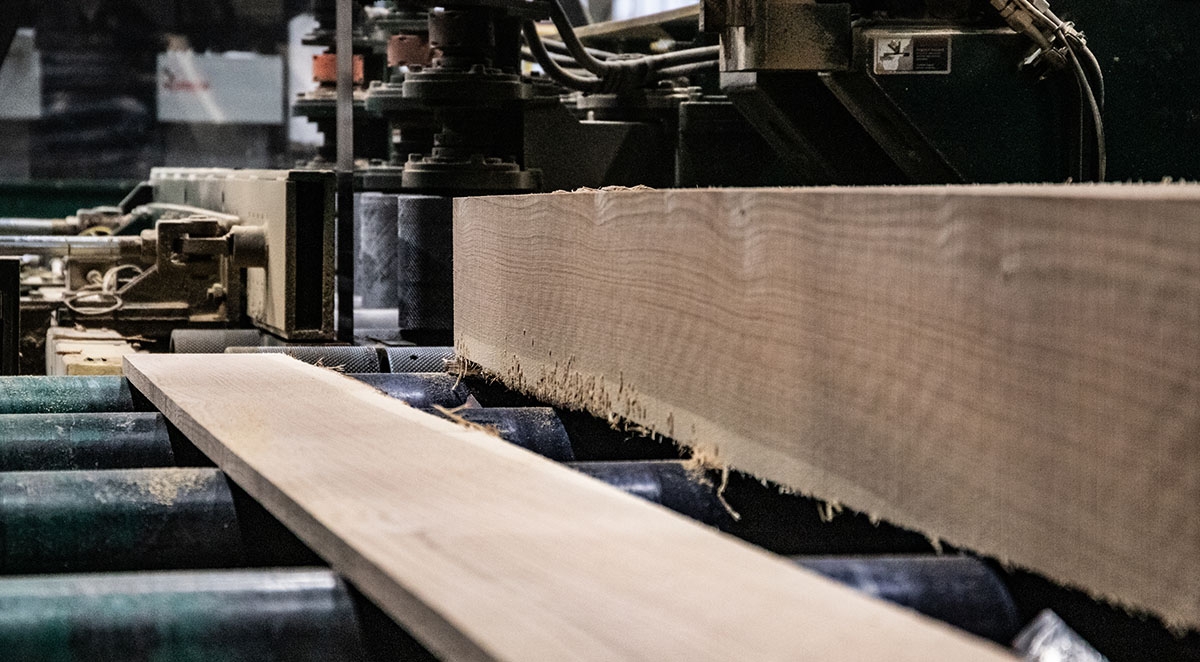
Understanding Custom Milling at the Planer Mill
Planer mills should always be ready for what is thrown at them by customers. While many builders may simply order raw lumber from big box distributors, some customers know the cheat code of working with a planer mill for custom lumber. Some of the primary requirements that may come up include:
- Exact thickness and width tolerances
- Species and grade selection
- Surfacing standards (S2S, S3S, S4S)
The most important phases in fulfilling custom orders at the planer mill are these machine settings and production schedules. Before production ever starts, each requirement must be understood practically. In order to adjust planer heads, feed rates, and depth of cut settings to obtain necessary tolerances without sacrificing the end product, mill operators must examine custom order data to determine needs.
Additionally, machine parameters must be coordinated with workflow choices like batch size, run sequencing, and inspection intervals. This will guarantee that the custom-milled timber is created with efficiency in mind, in addition to precision.
Kiln Dried Lumber
One of the biggest issues with lumber found on the shelf at many big box stores is that it is often warped or twisted. While many sawmills try their best to get straight lumber, in some cases cutting it down and drying it, not all wood is properly kiln-dried. Kiln drying wood is vital for keeping lumber straight and long-lasting.
Kiln drying works by reducing the moisture content in a controlled manner. Lumber is placed into a kiln where temperature, humidity, and air circulation are carefully controlled after being piled with spacers to allow for air movement. To avoid flaws like honeycombing or excessive stress, moisture is gradually removed from the wood.
Depending on the species, thickness, and planned use of the lumber, drying regimens are modified. This guarantees that moisture is appropriately and uniformly removed from every board. In addition to lowering the possibility of movement during surfacing or installation, proper kiln drying prepares hardwood for precise planing.
Sourcing Hardwoods for Custom Milling
One of the most important aspects of working with a mill is picking the proper species and grade selection for your project. Not all wood is created equal. There are a variety of qualities and species that each offer certain qualities that may or may not work for your needs. One way to improve efficiency is to pick the proper wood and grade for a project.
Some of the most common species include:
- White Oak: This wood is hefty, robust, and machine-friendly. frequently utilized in barrel staves, flooring, molding, millwork, and furniture.
- Northern Red Oak: Used extensively in kitchen cabinets and furniture, this thick, hefty oak is robust and long-lasting.
- Hickory: One of the strongest and heaviest hardwoods in the United States is hickory. Hickory is widely used for tool handles, ladders, sporting goods, and cabinets, and it plays a significant part in eastern hardwood forests.
- White Ash: Distinguished by its light to medium brown hue and straight, medium-to-coarse grain. Typical uses include flooring, tool handles, and furnishings.
- Cherry: A wood with vibrant colors that range from deep brown to red. It is a popular option for fine furniture, cabinets, boat interiors, and musical instruments since it machines smoothly and finishes incredibly well.
- Beech: Pale in color with subtle pink or brown tones, beech is unusually pliable for a hardwood. It is often used for veneer, flooring, crates, and woodturning.
- Yellow Poplar: Highly versatile and easy to machine, plane, glue, and finish. Common uses include doors, paneling, moulding, light construction, and furniture.
The American Hardwood Export Council (AHEC) uses hardwood grading standards based on the rules established by the National Hardwood Lumber Association (NHLA). These grades help buyers understand the amount of clear, usable wood available in a board and are widely used throughout the hardwood industry.
- FAS (Firsts and Seconds)
- F1F (FAS One Face)
- Selects
- No. 1 Common
- No. 2A Common
- No. 2B Common
- No. 3A Common
- No. 3B Common
Choose Efficiency with the Planer Mill at Church and Church Lumber Company
Manufacturers and builders alike can benefit from the efficiencies gained by working with a planer mill. At Church and Church Lumber Company, our planer mill produces a variety of planed lumber species and grades to support builders and manufacturers throughout the region and around the world.
We produce over 20 million board feet of lumber each year, and our mills combine large-scale production with the care of experienced wood professionals. Our process starts with top-quality wood sourced from regional forests that is cut down at the sawmill and kiln-dried. The final step is the planer mill, where boards are finished to perfection. Because we own the process from start to finish, we can ensure that boards are delivered to our customers with the highest quality in mind, while also getting rid of the guesswork by providing custom cuts and finishes for each board.
Why Our Planer Mill Customers Keep Coming Back
Church and Church Lumber Company Planer Mill has been around for four generations, combining experience with advanced technology to deliver consistent, reliable results. Our facility utilizes state-of-the-art equipment to bring our customers high-quality lumber with exact proportions.
If you are looking to improve your efficiency with custom milling, contact us today to learn more about our planer mill and how we can offer the best quality finished lumber to help support your business.