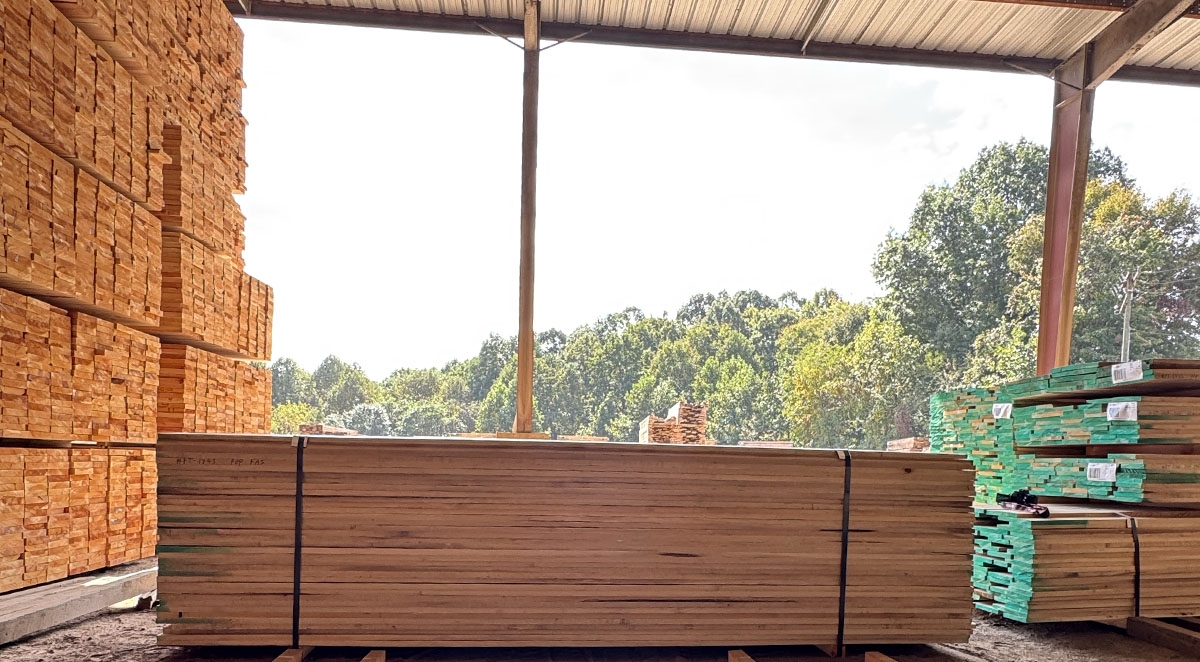
Why You Should Choose Planed Lumber From A High-Quality Mill
Lumber importers manage strict production schedules and thin margins. Lumber that arrives in rough, inconsistent, or unpredictable conditions increases costs and delays production. A planing mill that handles large volumes with tight tolerances helps eliminate these risks.
Lumber Importers Need Predictable Dimensions to Improve Production Efficiency
Importers value lumber that is uniform. When dimensions are consistent, manufacturing lines can operate at full speed without requiring constant recalibration. CNC machines, moulders, jointers, and edge-profiling equipment all run more efficiently when the input material is already surfaced accurately.
This predictability reduces wear on machinery, minimizes errors, and prevents disruptions caused by thickness variations from board to board. Importers serving high-volume production lines or custom shops alike benefit from this reduction in rework and unexpected downtime.
Lumber Importers Need Higher Yield In Every Shipment
Planed lumber provides a clear advantage in terms of usable material. Because boards are surfaced to standard thickness before shipment, manufacturers lose less material during final machining. This increases yield and reduces waste.
Importing planed lumber also helps buyers estimate output more accurately. When the lumber is already surfaced, there are fewer surprises once the boards enter the production workflow.
This increased predictability helps with pricing, customer estimates, and job costing for manufacturers producing flooring, millwork, or assembled goods.
Lumber Importers Need Cleaner Surfaces
Rough boards can conceal defects or inconsistencies. Planed surfaces show the grain clearly, making grade verification easier for buyers. This visibility gives importers confidence that they are receiving the quality they paid for.
For species such as rift-and-quartered white oak, which customers often select for straight grain and controlled movement, the clarity provided by planing is especially important.
Planed lumber also makes it easier to detect drying-related issues, such as surface checks or honeycombing, before it reaches a customer-facing product stage.
The Advantages Of Sourcing From a Mill That Can Meet Your Capacity Needs
Lumber importers benefit from steady availability. Markets shift, orders grow, and production timelines change. A planing mill that handles large volumes of lumber offers greater reliability during these fluctuations.
Our Planer Mill supports:
- Consistent supply for recurring orders
- Competitive lead times on mixed-species shipments
- Stable inventory for international buyers
- Flexibility to fulfill large or specialized requests
For importers, stability is essential. A mill that can maintain throughput reduces supply disruptions.
When new orders emerge or end-user demand spikes, sourcing from a mill with the capacity to adjust ensures operations stay on track. This is especially valuable for distributors balancing domestic and overseas contracts with varying timelines.
High capacity alone is not enough. Importers also need uniformity across every shipment. A planer mill that processes large volumes daily has refined systems for quality control, grading accuracy, and moisture management.
This consistency protects importers against unexpected variation, which is often the cause of costly production delays. Uniform packs are easier to integrate into automated systems, palletization, or barcoding for downstream traceability.
Lumber Expertise Matters In International Markets
Different regions around the world rely on specific species for flooring, furniture, cabinetry, windows, doors, paneling, and architectural components. Importers often choose Appalachian hardwoods and Southern softwoods because they combine strength with excellent appearance.
Appalachian Hardwood Lumber is Perfect for High-End Applications
Hard maple, soft maple, red oak, white oak, poplar, cherry, and ash are valued because they machine cleanly and finish well. When these species are planed correctly, their grain patterns become more visible, which allows buyers to sort efficiently.
Rift-and-quartered white oak remains one of the most demanded products among European and Asian importers. Its grain structure helps minimize movement and delivers a refined, vertical appearance that is ideal for flooring and fine furniture.
Planing enhances both the visual appeal and technical precision of these high-value products. It allows manufacturers to process boards faster and with fewer rejected parts, especially in tight-tolerance joinery or architectural assemblies.
White Pine and Yellow Pine Are Perfect for Construction and Millwork
White pine lumber and yellow pine lumber are versatile softwoods that serve a wide range of uses, from architectural trim to framing components to specialty millwork. Planing enhances their workability and exposes any issues before they reach the final application.
For importers who depend on reliable softwood shipments, a mill experienced in both hardwoods and softwoods provides a convenient and dependable source.
Domestic and export buyers alike benefit when they can source both hardwood and softwood species from a single mill that planes and packages lumber to consistent standards.
How Planing Improves Shipping, Handling, and Storage
Importers invest heavily in transportation. Freight costs, handling time, container space, and moisture control all factor into profitability. Planed lumber supports each of these areas by creating shipments that are more stable and efficient.
Planing Lumber Provides Better Packing Efficiency
Planed boards stack more tightly than rough-sawn boards. This produces consistent bundles that:
- Maximize space inside shipping containers
- Reduce shifting during transit
- Lower freight costs per board foot
- Simplify unloading for buyers
Tighter, more uniform bundles also reduce the need for repackaging or re-strapping in distribution centers, especially when transferring to pallets or racked storage.
Planing Lumbers Lowers the Risk of Damage in Transit
Surface irregularities on rough boards are prone to abrasion, chipping, and moisture uptake. Planing strengthens the exterior fiber layer by removing weak or brittle material.
This helps protect:
- Board edges
- Exposed grain during long voyages
- High-value species such as rift-and-quartered white oak
- Surfaces that will receive stain or clear finish
Better stability translates into fewer rejected boards after arrival. For importers serving high-end markets, these improvements also help protect brand reputation by reducing the chance of substandard products entering the supply chain.
Why Lumber Importers Prefer Working With A Planer Mill That Prioritizes Quality
A reliable planing mill reduces guesswork. Importers work across time zones, shipping routes, and regulatory systems. They depend on suppliers that provide accurate information, consistent preparation, and dependable grading.
Quality Control Begins Long Before Planing
At a well-managed mill, the planing process is the final step in a long chain of quality management. Logs are selected carefully, kiln schedules are monitored, and boards are inspected repeatedly.
By the time the lumber reaches the planer, the product is already stable and well-prepared. Planing is what brings the material to its final standard.
Quality-minded planing mills also invest in equipment maintenance, tooling upgrades, and training, which all contribute to tighter tolerances and smoother surfaces.
Importers benefit when mills have structured systems for grading, packaging, and documentation. These systems ensure shipments meet specifications and reduce problems at customs or during port inspections.
A mill with established export relationships understands how to prepare lumber to meet international standards.
Detailed documentation, consistent labeling, and export-compliant packaging support smoother customs clearance, fewer hold-ups, and greater confidence across the logistics chain.
Import Planed Lumber From Church and Church
Importers who prioritize consistency, stability, and long-term performance gain significant advantages when sourcing planed lumber from a high-quality mill. Planed lumber improves manufacturing efficiency, reduces shipping risks, provides better yield, and reveals the true value of each species.
The Church and Church Planer Mill provides Appalachian hardwood lumber, white pine lumber, yellow pine lumber, and rift-and-quartered white oak. Importers who need reliable, well-prepared lumber for global distribution can depend on our team to deliver accuracy, uniformity, and professional preparation.
If your company imports lumber for manufacturing, construction, or distribution, choose our Planer Mill as your trusted source for consistent, high-quality planed lumber. Contact us for more information about importing planed lumber from Church and Church.